Wednesday, September 4, 2013

DISCOVERING MOTHER

It's a sobering truth to admit that most of what we know about our parents will be drawn from personal experience. History won't consider most of our folks important enough to warrant extensive research for books or films, so what we see will really be what we get. And yes. That's sad.

By and large, it means we will remember our parents as we see them, as adults headed towards middle-age and beyond. We will know them, not for their hopes, but for their realities. Not through the folly of youthful day-dreams, but in the acceptance of their choices, and steeped in the dutiful fulfillment of their responsibilities.

Except for the senior high school portrait of my mother, every image of her records her as a mother, surrounded by at least a child or two, dressed in the budget-conscious attire of a woman stretching a tight income across ever-increasing needs.

Mom had the senior photo taken, but she never walked across the stage and earned a diploma. A few weeks after that photo was taken she talked her mother into taking her and a friend to Fun Land in San Francisco. A cocky nineteen-year-old soldier, far from his home in Maryland, stood by the entrance that boasted a grate rigged to blow ladies' skirts up, Marilyn Monroe-style. Mom and her friend crawled through a fence to avoid the wind gust, and the soldier spent the rest of the day following her around until she gave him her address. Six weeks later, she married that soldier. Her mother ignored the threat an irresponsible rush to the altar could pose because life at home held an even greater threat from an alcoholic step-father with a history of physical abuse.

All we knew of Mom's childhood were stories of that abuse, and the regret that she never finished high school. She mentioned her abhorrence at having her photo taken because her Portuguese ancestry made her stand out since the family's return to Maryland. She spoke of a love of art, which was evidenced by the little drawings she sketched on everything from TV guides, to paper bags. She also expressed a love of reading and writing, and recounted how her teachers told her she was a smart girl who could be anything she chose to be. Those old stories went in and out of young ears attuned to curent concerns.  Even as children, we could see the irony of her choices, that she escaped an abusive father by marrying an occasionally heavy-handed husband.

Mom worked hard at home, turning dime store goods into a Christmas wonderland complete with baked goods by the dozens. She made a penny go as a far as a dime, and she drew great pride from the fact that despite the lack of a diploma, she was able to contribute to the family budget by driving a school bus.

As I grew up, Mom attributed all my scholastic accomplishments to my father, an electrical engineer, who escaped an abusive home of his own, and who successfully used the military as a stepping stone from a life of agricultural poverty. We bought the story. Mom couldn't do the "new math" our homework required, and Dad travelled a great deal of the time, so those who could figure the material out on their own survived, and those who couldn't, struggled.

It crushes me now to admit I accepted that image of Mom as a simple, uneducated woman. If I had had my eyes open, really open, I would have seen her bright intellect reflected in her choices and accomplishments.

She earned her GED in her fifties to encourage grandsons lacking in their scholastic interest. She wasn't a library regular. To my knowledge, she never had a library card, but she always accepted offers of free books, and she always seemed to have a stack of Readers Digest Condensed Novels on her nightstand.

Sometime in the sixties Mom came across a box of old historical books. I recall her her pride over this find--a series of diaries written during the Civil War, and a bio of an old pioneer and trapper--but my teen-aged mind was too preoccupied with new math and the latest edition of Teen Beat to be concerned about the details.

Years passed, Dad mellowed, he and Mom became devoted sweethearts, then he passed away leaving Mom depressed and alone.  After many difficult years helping Mom maintain her independence we received a diagnosis of early stage dementia, and we moved Mom off the farm. While cleaning out decades of collected memorabilia, we came across treasures squirreled away in corners long forgotten.

We found boxes of photos Mom was handed after her own mother's passing, photos of her as as chubby-cheeked child, and as a dressed-to-the-nines teen in home-sewn fashions that rivaled catalog vogue. In some, her eyes were bright and filled with playful anticipation. Family shots showed her as a timid, awkward young woman. I began to know my mother anew.

My father believed in slides and their semi-annual projected showing, but we found a few dozen rare, secret candid photos from our childhood that featured a beautiful, svelte Portuguese-American woman surrounded by children. Her eyes spoke volumes. She was a study in contrasts. Shy, confident. Soaking up happy moments like parched ground in some photos. Grim-lipped and stoic in others. We remembered those days. Our own maturation revealed more of Mom.

We also found the old books, which have provided some of the most remarkable insights into who our mother really was, and probably still is, deep inside.

The diaries are difficult to read. The penmanship is flowery, as is the vernacular of the eighteen sixties. As a historical researcher and writer, I struggle with it, working hard to translate a few sentences. My mother read every page, even taking the time to insert slips of paper with her own notations within the pages. Her notes have been invaluable to me.

The old bio of the pioneer is likewise a challenging read. It features hundred of characters, many Shawnee or Iroquois, with the difficult spellings of those languages. It features the unfamiliar names of places changed by treaties and statehood, and yet, she read every page, many times I'd venture to say. Again, she inserted her own notes, written in her lovely hand, along the margins.

I begin to picture her, lying on her bed in the evening after we were all asleep with her books opened and her pen and slips of notebook paper beside her. On nights when Dad was having adventures in far away lands, Mom was having her own adventures. She was taking advantage of the opportunities available to her to learn.

The author in me is incredibly aware of the importance  of these discoveries, that Mom's treasured books were historical. She is likely the unrecognized root from which my love of history and the written word grows. Mom didn't write short stories or novels. She wrote about her life, her testimony, her walk with God. We found notebook after notebook filled with her grateful recounting of miracles wrought in response to prayer, and of those provided in a moment of urgency. Long notes were tucked into cards and letters to friends and children and never mailed. We have them all now.

We are finally discovering Mother, who she actually was in her heart, and what dreams she drew upon as she raised us. She left a silent, secret key to her heart in these letters and notes, cards and slips of paper. They are sacred now. I'm scanning them for the family.

She can't know that she's still teaching me, providing unspoken encouragement to do better in my personal writings, to commit more of my effort to the legacy I'm leaving for my family. I don't want the majority of that legacy to be scraped off Facebook pages and blog entries. Except stories like this one.

Thanks, Mom. Yes, you're still teaching. I guess you always will.

Tuesday, August 27, 2013

DELIGHTED TO BE SPEAKING AT MT. AIRY'S HISTORY WEEK

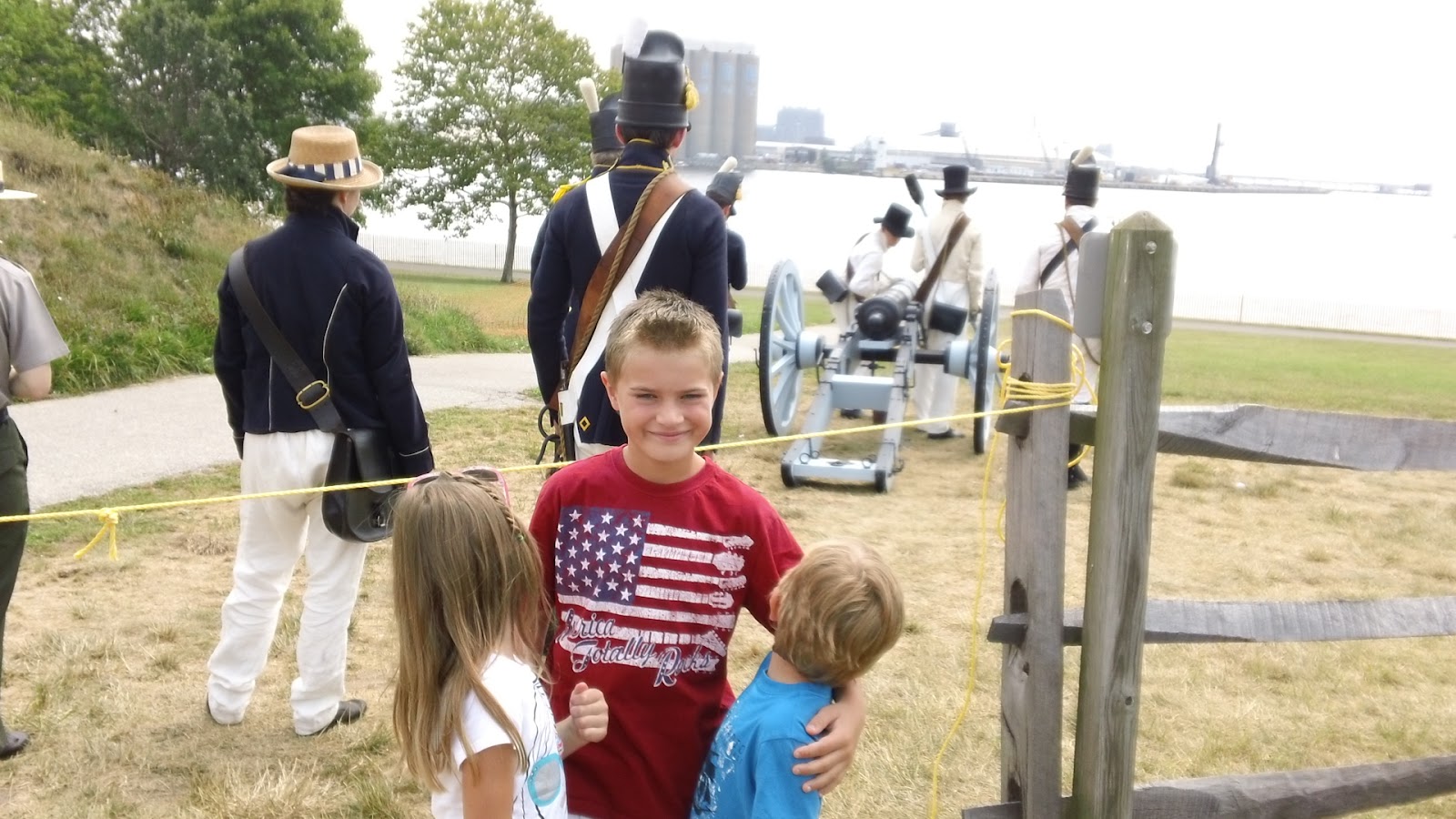
Historic Mount Airy, Maryland's annual celebration of American History Week is a week of family fun and learning, with a wide variety of activities and speakers. I'm honored and delighted to have been asked to present on Tuesday. I'll be speaking about Francis Scott Key and the events that influenced his writing of "The Star-Spangled Banner."

I hope you'll come and enjoy some of Mount Airy's festivities the week of September 7th through the 14th.

YES, I SIGNED THE LETTER, AND HERE'S WHY

You may have heard or read about the issue storming the LDS publishing market and firing the media outlets right now. I live in Maryland, far away from the scene, and I've never worked with the publishing house involved, but because this issue has potential to tarnish all LDS authors, and the LDS community at large, I felt I needed to take a stand.

In short, a novel that was contracted by an LDS publisher, and ready to go to print, was pulled because the author's bio included mention of his same-gender partner. The publisher knew the author was gay when he offered him a publishing contract, but preferred to not have him disclose that information in his bio fearing it would offend the company's primarily LDS market.

I won't rehash the details here. Instead I'll direct you to my good friend Braden Bell's blog. Braden does work with the involved publisher and he offers a voice of compassion and justice tempered with reason.

When the public became aware of the fracas, sides were taken and unkind generalities were being assailed. A letter supporting the legal rights of the author was issued by members of the LDS writing community and I agreed to sign it for a variety of reasons.

Again, a link to the letter is posted on Braden's blog.

As a Church, we support traditional marriage and families. I personally support traditional marriage and families. But as a people, we are also taught compassion, love, civility, and kindness whch have been sorely lacking in so much of this debate.

As an LDS author, I believe in the law and in binding contracts. As an American, I respect the right to free speech, and the right of a publisher to choose what they will invest in and place their name on. In this instance, contracts were violated, and characters were assailed.

This is why I signed the letter.

Thursday, July 25, 2013

Book Nook Review: "PRIDE'S PREJUDICE" by Misty Dawn Pulsipher


PRIIDE' PREJUDICE
by
Misty Dawn Pulspher
 
 
Pride’s Prejudice is debuting author, Misty Dawn Pulsipher’s, mature, contemporary treatment of Miss Jane Austen’s beloved coming of age novel about class distinctions and false assumptions. While many authors are attempting Austen adaptations, particularly of Pride and Prejudice, Ms. Pulsipher has a rich writing style and the honest courage worthy of such an effort.

College coed, Beth Pride, and her roommate Jenna, meet two wealthy businessmen at a college charity auction. Lighthearted Les Bradford bids on Jenna and sweeps her off her feet, but William Darcy’s mind is preoccupied with family problems, and aside from being roped into attending this charity function, the only thing he’s less interested in is paying to dance with a college coed. Enter Beth, the shanghaied auction “item” and last coed left standing. William bids on Beth as an act of mercy, which he thoughtlessly reveals to her, wounding Beth’s pride. In retaliation, she fires off a cutting reply, and the unhealthy dynamic between Beth and William, and their best friends, Jenna and Les, is set early on.

Pride’s Prejudice is a romantic pleasure fest. Technically, Pulsipher’s dialogues are crisp and believable, and her economical use of words moves the story along, while painting clear settings and building her characters into rich satisfying friends you care deeply about. Pulsipher doesn’t tell us a great story. She paints one for us, using beautiful lines like these:

The house fell behind them like a sulky child left standing in the road.

. . .it was clear to Beth. The connections we share in this life are fragile—wispy spider webs, easily swept aside with the crass bristles of circumstance.

But there’s so much more here.

It is no easy task to adapt Austen-era situations to our day while still remaining relevant, clean, and honest. Pulsipher’s writing sizzles with romantic tension and pleasure while remaining a clean read that doesn’t insult a thinking woman’s sensibilities, such as these passages:

A sick feeling laces through her insides like a parasite. It takes up residence in the dark recesses of her heart and mind. Could he have possibly done this to her?  . . .The glimmering castle of her girlhood hopes burns down, leaving a heap of smoldering ash in its place.

Liquid fire saturated her body, incinerating any trace of coherent thought.  . . Time seemed to ebb, as if the earth had slowed its rotation. As if they were in another dimension. . .  When her fingertips grazed the skin of his waist at the sides, he pulled her in tighter for an instant, pressing his palms into the small of her back. Then he froze. Somewhere, perhaps in that other dimension, an invisible switch had been thrown.

Pride’s Prejudice was self-published by Ms. Pulsipher, and admittedly, it contains a few more editing and formatting errors than most commercially-published novels, but only a few, and stylistically, the characters’ occasional internal conversations distract from the power of the well-crafted dialogue, but no worries. The quality of the author’s writing easily triumphs over these minor distractions. The Prologue nagged at me through the first half of the book, but set it aside. Pulsipher ties it in beautifully at the end.

Pride’s Prejudice nearly caused some marital discord in my own home. I seriously stole away to read this book every chance I got. It's that good. In fact, I'll be nominating "Pride's Prejudice"  for a 2014 Whitney Award. As I said, it’s that good.

(Better yet, Ms. Pulspher is giving the ebook away for free until July 30th.  Here's the link. Grab a free copy.)

Thursday, July 11, 2013

WHEN THE RESEARCH BLESSES THE WRITER PERSONALLY

Teachers often say they are the ones who learn the most from preparing a lesson. Writers can say the same when they research a topic for a book.
 
I researched dementia while writing "The Dragons of Alsace Farm" because we were dealing with those issues in the family. My research came too late to help with some issues, but it did provide insight and assistance in many ways. One was a nudge to pull out the old photos and sit down with Mom. 
 
I had read some interesting pieces on the power of music, and I spoke with a dementia-trained caregiver who explained the great trigger clothing and other belongings can be. I know from personal experience that certain items become "buoys" by which these patients "navigate" when anxiety makes them overly confused. The photos were amazing
 
She had been extremely agitated and angry the previous night, and she needed to be calm the next day. Sleep helped, but the photos maintained that calm.
 
Her expressions shifted from blank, to wonder, to recognition as she studied each photo. Sometimes names came, but when names remained vague, she became frustrated and embarrassed, and we'd focus on things other than the faces--clothes, cars, the house in the background, anything. Ideas and stories began to flow, some were completely unrelated to the photo, but it was all golden. I kept encouraging her and thanking her for teaching me so much. That was perhaps the best thing for her. She was so proud, and she seemed to sit straighter and walk with a surer gait after our gab session, as if she had been restored. It was wonderful. She filled in holes in our genealogy that day that she hadn't been able to provide on previous days, and most importantly, the exercise calmed her, made her feel connected, and brought her joy. 
 
So "Dragons" was actually intended to bless me. And let me suggest that if time has passed since you last sat down with an aging loved one and those old family pics, pull them down and spend an hour reliving old memories with them. If your experience is like mine, it will heal you both.
 

Friday, July 5, 2013

Red Skelton's Pledge of Allegiance

That patriotic spirit is still humming in many hearts today, so this sweet but powerful address on the Pledge of Allegiance by Red Skelton will add to your celebration of America. It would make a wonderful Family Night lesson. I don't know how many schools even start the day with the Pledge. I hope your children's school does. If not, it's up to us to treasure these thoughts and teach them to a new generation.

Have a great day.
Laurie


Thursday, July 4, 2013

WAKING UP IN AMERICA


"Awake; awake from a deep sleep, and shake off the awful chains by which ye are bound. . ."

That scripture comes from a scripture in the Book of Mormon, II Nephi 1:13. Most LDS people will recognize it as a call to a spiritually complacent people to change and turn back to God, but regardless of your religious persuasion, the sentiments seem poignant for our day.

If you know much about American history and the tumultuous birth of this nation, it's hard to deny the hand of the Lord was in it--that we survived the Revolution at all, and that a passel of minds, such as those of our Founding Fathers, came to be on America's stage at the same time with such unprecedented vision.

Modern scripture verifies the divine spark that inspired these men, and our forefathers freely acknowledged God's hand in America's formation. Said George Washington, "The man must be bad indeed, who can look upon the events of the American Revolution without feeling the warmest gratitude towards the great Author of the Universe whose divine interposition was so frequently manifested in our behalf." Said Patrick Henry, "The American Revolution was the grand operation, which seemed to be assigned by the Deity to the men of this age in our country."

These words from the Book of Mormon chill me now. Speaking of America, it calls this land "a land of promise," and "that there shall none come into this land save they shall be brought by the hand of the Lord." And then the responsibility of this great blessing is spelled out. "Wherefore, this land is consecrated unto him whom [the Lord]shall bring. And if it so be that they shall serve him according to the commandments which he hath given, it shall be a land of liberty unto them; wherefore, they shall never be brought down into captivity; if so, it shall be because of iniquity."

This land was set apart to be a special land of freedom and hope, and we who are blessed to live here are supposed to be stewards over these freedoms. But most of us fell asleep at our posts, and we're in serious trouble. . . After years of lazy, selfish slumber, current events aroused our curiosity, and we awoke like angry bears to find that much had happened while we were in political hibernation. And now we don't know how to turn things around, or who to trust anymore.

I'm trying to kindle patriotism in my family like never before. I want my grandchildren to love America in the old-fashioned flag-waving way. Let's take our families to the places where freedom was won. Let's take time at the dinner table to talk about the men and women who sacrificed so much to give us the liberty to think, and worship, and speak freely. Let's pray for the president to hear and see the vision the Founders envisioned for America.

I pray for our military and I'm grateful for them every day, but while their monumental sacrifice holds our foreign enemies at bay, we have plenty of troubles here at home as well, and I think we need much bigger help to win these battles we're facing now. It's time to stop, drop and pray for this country like we've never prayed before.

But I feel hope abounding again. I drove home from a meeting near ten o'clock last night and entered Mt. Airy to the boom of the town's firework's displays to kick-off the Fourth of July celebration. Cars filled every shoulder of Route 27, while blankets and chairs covered every spot of rain-soaked grass for blocks around the carnival grounds. Families gathered in awe for the grand show--children on laps, and men with arms around wives. Joy, hope, love, reverence--these were the expressions on faces as they watched the sky light with brilliant fire. And I have to hope that whispers of names like Washington and Jefferson were spoken, along with words of gratitude for the sacrifices of that generation and heroes from every generation since. I believe there were soft prayers of thanks to God for this land, and earnest prayers of protection for those who defend and protect her today, those on foreign soil, and those awaiting the call to leave homes and family. I believe there were thoughts of the great founding documents--the bold Declaration of Independence, and the visionary Constitution. And I pray there were prayers for those elected to lead her. Oh, we need those.

So my prayer for America is that we pause to be grateful for all these things, acknowledging God whose hand hid this land and protected it until He could raise up a nation that would be an Ensign to the world of hope and liberty, a cradle where the divine spark that fuels the human spirit could flourish.

Isn't she wonderful? May God bless her and each of us.

Happy Fourth of July!